My Books

Wednesday, August 7, 2013

An "Unproductive" Mom's Daily Goal


I remember when my daughter was a toddler and I was going to a five-day writers conference in another state. My sweet husband took a week of vacation from work to be home with her and our two school-aged children. He looked forward to it and even made a list of projects he would work on during his week off. We talked on the phone every day I was gone and toward the end of the week, I asked him how his projects were coming. I could almost see him throw his hands up in exasperation. "I can't get anything done! Here I had a whole week off and I haven't been able to finish one project!" I totally understood. Caring for a home and children leaves little time for anything else.

Being a mom is tough work that often leaves you feeling unproductive. Sometimes it's all you can do to put one foot in front of the other. My oldest daughter, Jessica, is a stay-at-home mother of six children, aged three months to twelve years. She has little time to feel productive at anything other than taking care of the children and meeting their needs. She also home schools her three school-aged kids. Remarkably, she is happy, content, and peaceful in all the activity that constantly swirls around her.

I recently overheard a mom of three asking my daughter for her phone number. This mom said she often felt like she never accomplished anything in a day. She sounded a bit defeated and frustrated. "How do you do it? I never get anything done!" She needed someone to talk to at times when she felt overwhelmed.

Jessica's response surprised me. She smiled compassionately, then said,."I don't get anything done either. But one day I asked Kevin a question that changed my perspective. I asked him, ‘If I could do only one thing every day that would make you happy, what would it be?’” His answer? "I'd like it if you could get dressed every day." Her face lit up just reliving that moment. She looked that frustrated mom right in the eye, smiled brightly, and said, "I could do that!" 

So every day, she gets dressed. She was quick to point out that it may not be until fifteen minutes before her husband gets home from work, but he sees her in real clothes every day. If she accomplishes that, then she has been productive. It gave her a whole new perspective. Doing that one little task makes her feel victorious instead of like a failure. She doesn't have to worry that she's disappointing Kevin, because she did the one thing that matters most to him.

If you feel unproductive as a mom, ask your man what one thing you could do every day that would make him happy. You may be surprised at what he considers important. And it may take a load of stress off your shoulders. Post the answers you get to that important question in the comments below. It will be interesting to see what matters most to our husbands. 

In the meantime, keep on keeping on. You're doing the most important job in the world. Your house may be a mess and you may feel like a walking zombie at times, but what you do matters. When you're loving and caring for your kids, you're doing the most productive thing in this season of your life. Don't sell yourself short. Your productivity will be evident when your children grow into happy, responsible adults. And it will be worth every sacrifice and unproductive feeling you have today.

Linda

Thursday, March 28, 2013

How to Host and Amazing Race Event


My husband and I are Amazing Race fans. We also teach the young adult Sunday school class at our church. We thought it would be fun to combine these two things and put on an Amazing Race event for our class. It was such a hit that our youth leaders have asked us to help them plan one for the teens. After church, I separately overheard a nine-year-old boy and a sixty-something woman  say they thought we should do one for them, too! Really, such an event could be done for any age group, young or old, and can be hosted as an event, birthday party, or any other fun gathering.

Here are the steps we took in planning our event:
  1. Set your date and time period. We planned to make ours last from 8:00 a.m to 8:00 p.m. Turns out our racers blew through the challenges so quickly they were done by 3:00! However, setting.the times gives you a framework to work within.
  2. Brainstorm challenges your teams can do. We had teams of two just like on the show. Challenges can be physical, mental, or a combination of both. Because this was a church event, we made some of ours service-oriented, like doing chores for some of our elderly members' homes and making bracelets for Shoebox Ministries.
  3. Select locations to put clue boxes and get permission from businesses, homeowners, or whoever, to place a box on their property. We made our own clue boxes out of shoeboxes by covering them with red and yellow duct tape and mounting on wooden stands. On some, I added paper fasteners to the lid and front side of the box. I wound a rubber band around the paper fastener on the box. Then I stretched the rubber band up and over the paper fastener on the lid to keep it closed (see photo).  
  4. Make up a schedule of where your racers will go to find clue boxes and perform challenges. Give a copy of the schedule to those helping with challenges so they'll know roughly when to expect the racers.
  5. Write clues to lead racers to clue boxes and challenges and print them on 4" X 6" postcards Make sure these clues include words or phrases racers can find in an Internet search to help them find where they're supposed to go. For instance, one of our clues was, "Go to 'where the pets go' closest to the church. Matthew 4:19" Googling "where the pets go" led them to the Petco a half mile from our church. The verse clued them to look in the fish department for the clue box. One of the challenge clue cards read, "Take one plate of cookies to the church Paiute widow. Do chores for her as instructed when you get there. (Choose who will do this challenge.)" This led them to my 80-year-old mom's house on Paiute Street who had a list of chores.waiting for them when they arrived.
  6. Establish checkpoint locations for teams to find out where they stand in the race. We had two such checkpoints and used local landmarks as our locations. Racers had to figure out clues to find these also.
  7. Establish your rules up front. We allowed racers to use their smart phones to research clues. We only let one member of each team to do each challenge and required them to choose which team member would do each challenge before they knew the details of what they'd be doing. Other rules included the same player can't do more than two consecutive challenges, racers had one hour to complete a challenge and if they couldn't complete it in that time, they were give a ten minute penalty, but could move on to the next challenge. Make whatever rules you feel are appropriate for your group. Print out the rules and give a copy to each team the day of the race.
  8. Locate drivers and videographers for each team. We thought it would be safer if racers weren't driving themselves around. And we definitely wanted to capture the race on video.  We used teens as our videographers and their parent or grandparent as the driver. The videographers acted as witnesses that racers completed challenges by the person who chose to do it, that they were done correctly, and within one hour.
  9. Decide if you'll give prizes to the winners and if so, what they'll be.
  10. Make up a list of things racers will need to bring with them. Money? Church directory? Water? Cleaning supplies? Smart phone? Give the list to your racers a week before the race.
  11. The day of the race, take your clue boxes to their locations before the race begins. We made the mistake of having only the first couple of boxes in place, figuring we could put the rest out after the race began. Turns out the racers did the challenges way faster than we imagined and sometimes beat us to the next clue station before we had the clue box out! We had trouble staying ahead of them.
Some of the benefits of hosting an Amazing Race event are that it is a great team builder, and brings different generations together in one fun event. If you have questions about details of how to pull off an Amazing Race event, or if you'd like a free copy of our rules, e-mail me at lmcarlblom@yahoo.com. And if you'd like to see more pictures of our Amazing Race event, check them out on my Facebook page at http://www.facebook.com/lindamcquinncarlblomauthor. While you're there, I'd be honored if you'd "like" my page.  You can also Google "The Amazing Race" for challenge ideas.

 I hope you have as much fun at your event as we did!

Linda

Wednesday, January 23, 2013

Bible Reading - Book vs. Electronic

I'm a reader. I love reading books in any format, whether the good old paper version or an electronic version on my smartphone or Nook. I find I'm reading more and more electronically, including my devotions. I have a Bible reading plan I chose at YouVersion.com and read it at my computer each morning.

When it comes to reading my Bible in a class or church service, however, I've learned that I prefer reading from my marked up Bible rather than an electronic version. I navigate it faster and easier and I like the feel of the Good Book in my hands, its thin pages rustling between my fingers. That's probably because that's how I grew up and learned to use the Bible.

But what about today's generation that sometimes learns to read their Bibles via electronics? I've got mixed emotions about this. On one hand, I want kids to use a regular paper version of the Bible so they can learn the order of the books and how to find each one. I want them to know the Old Testament from the New Testament. Will they learn those foundational things when they simply touch which book and chapter they want to read on their device? How will they  be able to find Bible passages should they be unable use their electronics? Or does that even matter anymore?

My own personal preference is that they learn the books of the Bible when they're young, before they have electronics to depend on. Then when they get electronic devices, they'll already know the basics of the Bible, so it won't matter so much that they're not using the old paper version.

I'm interested in other people's opinion on this. Should kids learn the books of the Bible anymore or is that outdated in today's world? Shouldn't we just be glad when we see them reading their Bibles in any form? Let's talk about this! Leave your opinion in the comments below.

Linda


Friday, December 7, 2012

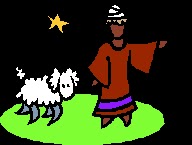
How to Host a Christmas Shepherd's Dinner

Last week I promised I'd share how to throw an awesome shepherd's dinner as a way to teach your kids the true meaning of Christmas. Well, it's Friday already and I'm just getting around to it. Hope you haven't been holding your breath! But 'tis the season to be busy--and throw in an elderly father-in-law with chest pains and  an unexpected surgery in the last week and well...you get the picture. Life is all about family and I'm blessed to be a stay-at-home wife and mom available to help out in such situations. So on to the business at hand--throwing a shepherd's dinner!

The night Jesus was born, the shepherds were "watching their flocks at night" (Luke 2:8). You and your family are going to become one of these shepherds for your shepherd's dinner.

Costumes: Bathrobes; headdresses made of dish towels or cloths. Fasten your headdress with a headband or strip of cloth tied around your forehead.

Explain to your kiddos that shepherds were people whose job was to take care of sheep. They didn't just put out food and water for them like we do for our dog. They stayed out in the field with their sheep all night, watching over them so wild animals didn't come and hurt them. Remind them this is what a good shepherd does and that Jesus called Himself the Good Shepherd (John 10:11,14-15).

If possible, have your shepherd's dinner outside around a campfire or outdoor fireplace. Then you can look at the stars and wonder which one might have guided the wise men. If you can't have your dinner outside, spread a blanket on the floor and have an indoor picnic.Maybe even stick some glow-in-the-dark stars on the ceiling. Imagine what it would have been like to be watching your sheep like usual and suddenly see the sky light up with angels.

Engage your child's imagination by asking them questions, such as:
How would you have felt when you saw the angels in the sky?
What do you think that looked like? or Finish this sentence: A sky full of angels would be as bright as _____.
What would you have done when you saw the angels and heard what they said?
How do you think the sheep reacted?
Do you think you would like being a shepherd? Why or why not?
What would be your favorite part of being a shepherd? Least favorite?

Make your shepherd's dinner a fun event. Let the kids help prepare the food. Keep your menu simple, like they would have had in Bible times.

Sample menu:
Cheese and crackers
Bread and jam, honey, or hummus
Olives
Fresh or dried fruit
Nuts or seeds
Beef jerky or cooked meat

During your shepherd's dinner, read the Christmas story from either your Bible (Luke 2:1-20) or a children's picture book. A couple of my favorites are: "The Christmas Story" by Jane Werner Watson and "Room for Little One" by Martin Waddell. Talk about that miraculous night of Jesus' birth, but don't drag it out longer than the kids can listen. Keep it fun and allow for silliness. After all, you want your shepherd's dinner to be a tradition they look forward to year after year.

I pray you enjoy your shepherd's dinner. Fine-tune it as needed to work for your family. Most of all, remember the Savior, the greatest gift of the season.

Merry Christmas!

Linda


Wednesday, November 28, 2012

Teaching the True Meaning of Christmas

In all the busyness of the Christmas season, it's easy to let its true meaning slip through the cracks of the rough manger bed. Is it really that important our kids hear the age-old story about Jesus' birth? Isn't it a little outdated and boring?


The answer is a resounding, "No!" That dusty old story, handed down through the centuries, loved by millions, is more than just a story to be told to your child. It's an anchor for his soul. It puts meaning into all the chaos. It whispers in your child's ear at night that Jesus was born as a baby just like he was. It makes Jesus someone your child can relate to. Your son or daughter can imagine Him as a baby, then as a child growing up. Telling the biblical Christmas story allows the Christ-child to be his Jesus, not just his parents' or pastor's.

So how do you get across this all-important story to a child? Here are some ideas for teaching the true meaning of Christmas:
  • Purchase a kid-friendly nativity scene. It can be made of plastic, fabric, or anything else that won't break. Encourage your child to hold the baby and move the characters around. There is no "right" place for each one to be. Help him to understand this isn't just another toy. It's special and should be treated with love and respect, just like the Bible is more special than any other book.
  • "Tell" the Christmas story with the nativity scene. Put only Joseph and Mary in the stable at first. On Christmas Eve, let your kids put the baby in the manger. Then let them arrange the angel and the shepherds. Wait to put the wise men in the scene until after Christmas since they didn't likely arrive until later, perhaps even as much as three or four years later! Or let your children act out the story with the nativity characters as you read it from an easy-to-understand Bible version or a children's storybook.
  • Provide simple costumes and props (bathrobes, scarves, towels, baby doll, stuffed animals) and have your children put on a play of the first Christmas.
  • Have your children create their own storybooks telling the Christmas story using their own words and illustrations.
  • Make a birthday cake for Jesus and decorate the house for a birthday party.
  • Talk to your children about what gifts they can give Jesus for His birthday, then place them under the Christmas tree. What would make Jesus happy?
  • Go outside at night and look at the stars. Talk about how the wise men followed a special star to find Jesus after He was born.
Another way to teach your children the true meaning of Christmas is to hold a shepherd's dinner. I'll explain how to do this in next week's post. In the meantime, keep looking for teachable moments and ways to point your children to Jesus at this hectic time of year. As the angels told the shepherds that night, "Fear not!" Your kids will get the important message of Jesus' birth if the message is important to you!

Christmas blessings!

Linda


Tuesday, November 20, 2012

Thanksgiving Reflections

It's almost Thanksgiving! I'm looking forward to spending the day with my extended family. Everyone's coming to our house, all 23 of them!


I'm thankful for the opportunity to offer hospitality, love, and nourishment to each one of them. I'm also thankful everyone is bringing a portion of the meal, making my role a little less daunting. I'll provide the turkey and our traditional chicken noodles. The rest of the family will bring dishes such as corn, potatoes (both mashed and sweet), dressing, green bean casserole, rolls, pies, cranberry salad and chips and salsa. I eagerly anticipate the hugs of grandchildren, laughing with my sister, drinking coffee with my mom and enjoying my children--all rich blessings from the great Giver of all gifts.

I pray you have memory-making moments that last a lifetime. That you savor every blessing of life as much as you do the feast you eat. And above all, that you remember to thank the One who makes life worth living.

This is one of my favorite songs of thanksgiving. Maybe you'd like to sing it with your family before your meal, or even as your prayer this year. Many of you probably know it, but if you need to hear the tune, you can listen to it here: http://www.elyrics.net/read/d/don-moen-lyrics/give-thanks-lyrics.html.

Give Thanks
by Don Moen

Give thanks with a grateful heart
Give thanks unto the Holy One
Give thanks because He's given Jesus Christ, His Son (repeat)

And now let the weak say, 'I am strong'
Let the poor say, 'I am rich
Because of what the Lord has done for us' (repeat)

Give thanks

Thanksgiving blessings to you and yours!

Linda

Tuesday, November 13, 2012

Thanksgiving Traditions


Thanksgiving is probably my favorite holiday. I love that it begs us to stop and give thanks to God for all our many blessings. It asks us to look at life from a different perspective, one that isn't always wanting more, and to be content—yes, even downright thankful!—for what we already have. It's easy to forget year to year how we've grown and how God has blessed us. So in order for our family to remember how very blessed we are—not just one day a year, but throughout our lives—we have a couple of Thanksgiving traditions we continue to this day.
 The first and my personal favorite is the Thanksgiving tablecloth. My mom bought a white linen tablecloth a dozen or more years ago and some permanent fabric markers. She asked us all to write on the tablecloth something for which we're thankful. Every year we reuse the same tablecloth and add what we're thankful for or one way in which God has blessed us that year. We all sign and date our entry. This became particularly meaningful after my father died and we could see his writing on our tablecloth and remember his legacy of faith and thanksgiving. It's also fun watching the grandchildren grow and seeing their scribbles turn to actual writing. It's a linen journal of thanks that we gather around as we eat the traditional feast each year. And because we use permanent fabric markers, the tablecloth is washable.

The other tradition is newer, only a few years old. In the Bible when people saw God at work in their lives, they often built a memorial to God out of rocks. It reminded them of what happened at that place and gave them opportunity to tell their children of God's faithfulness to them. I set a basket of smooth river rocks, usually two to three inches in diameter, in a basket. Each person takes a rock and writes on it what he's thankful for or a way God has worked in their life. They can then take the rock home and start building their family's thanksgiving memorial. It's also a way to share your faith as people see your pile of rocks and ask what it is.

There are so many ways to acknowledge God's goodness to us. It doesn't matter how it's done, only that you recognize the Giver of every good and perfect gift. So gather ’round the table and give thanks!

What Thanksgiving traditions do your family practice? If you don't have any, do you plan to start some? What will you do?